19/05/26
This event marks the Final Event of the EU-funded KEYSTONE project, presenting key results and lessons from 3 years of work on digital solutions for smarter, paperless, and more efficient enforcement compliance in transport and logistics. Featuring contributions from the sister project SETO, the sessions will highlight how complementarity between EU initiatives, through interoperable systems, data sharing, and innovation, can support both operators and enforcement authorities. Project representatives will share insights from real-world pilots, highlighting challenges and barriers. The event will also explore how the legacy of both projects can be sustained beyond their lifetime, paving the way for smarter transport solutions across Europe.
This session aims to find answers to the following questions: how can Europe regain or maintain leadership by focusing more on competitiveness and less on competition? What is the added value of involving outside countries into European research programs? How to maintain the European strategic autonomy, technology sovereignty and reduce dependencies from other countries?

BMW Group

European Commission

Clean Aviation Joint Undertaking

Fincantieri S.p.A.

IKEA supply AG

Department of Rural and Community Development and at the Department of Transport, Ireland
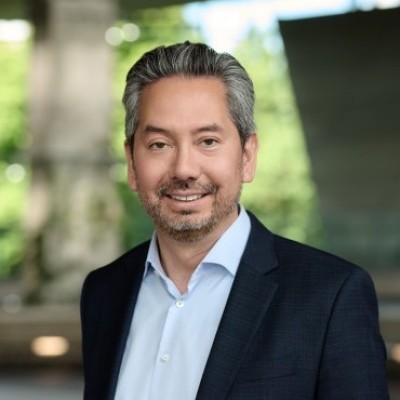
BMW Group
From the Azores island of São Miguel in Portugal to Denmark’s tech hubs, the project has tested the limits of Vehicle-to-Everything (V2X) technology. Now, it is time to showcase real-world results from the project’s four European V2X demonstrators in Portugal, Slovenia, Greece, and Denmark.
Experts will present a strategic roadmap and regulatory solutions to bring these technologies to market, followed by a collaborative session with V2X Cluster projects (Drive 2X, SCALE, AHEAD, ePowerMove) where project leaders will pitch the next generation of energy grid innovations and discuss the future of V2X technology.
Join the conversation as we explore solutions to turn electric vehicles into the backbone of Europe’s energy system.
Hungary's most significant business meeting has played a decisive role in the domestic and regional industrial sector and economic life for years, creates a unique opportunity for manufacturing, distribution and service companies to present their portfolio.
This is a special professional forum, where not only visitors but also exhibitors can build relationships, conclude business agreements, find cost- or energy-efficient solutions to special or everyday problems, present their innovation activities and exploit the synergy between industries.
**Co-events:** MACH-TECH and INDUSTRY DAYS machine manufacturing, welding technology and industrial trade exhibitions
The exhibition group is enriched by high-quality professional programs.
Adam Strelisky
It aims to bridge R&I and policy to co-develop strategic priorities for the future, and discuss how to further support the rollout of charging infrastructure, in line with the Automotive Action Plan: accelerating the roll-out of charging, grid access, V2X, the ‘European Clean Transport Corridor initiative’, and where relevant the ‘European Connected and Autonomous Vehicle Alliance’, as well as financial instruments like the Alternative Fuels Infrastructure Facility (AFIF).
The session would provide a strategic context for challenges and opportunities related to the deployment of charging infrastructure for EV and their integration to the grid and would contribute to the development of a comprehensive and sustainable transport system in Europe.
Moderator:
Eric von Breska (DG MOVE)
Rapporteur:
Beatriz Ildefonso (DG RTD)
Speakers:
Michael Bültmann (ABB)
Alessandro Bernardini (Iveco Group)
Ádám Tóth (E.ON)
Omar Hegazy (VUB)
This session explores how these strategic nodes are being transformed into integrated, multimodal energy and data hubs that support decarbonised logistics and mobility chains. Smart energy management, digitalisation, and automation R&D will be addressed as key tools to enhance operational efficiency, reduce emissions, and enable real-time optimisation tested through collaborative pilots. Case studies from Europe and beyond will highlight successful, replicable and scalable approaches.
The session will also identify R&I challenges and outline the research, regulatory and investment frameworks needed to accelerate scale-up, emphasising modular innovation, cross-sector collaboration and EU partnerships contributions to climate-neutral and resilient transport infrastructure.
Moderator:
Krzysztof Kuik (DG RTD)
Rapporteur:
Giovanni Circella (University of Ghent)
Speakers:
Annefleur Klaus (Schiphol airport)
Erwin Verstraelen (Port of Antwerp)
Helena Athoussaki (Motor Oil Group)
Klara Wittkowski (Airbus)
Jorrit Harmsen (TNO)
Moderator:
Patrick Mercier-Handisyde (DG RTD)
Rapporteur:
Carmela Canonico (UITP)
Speakers:
Ádám Bodor (BKK)
Marc Rozendal (EIT Urban Mobility)
Katie Black (Transdev)
Johan Leveque (La Poste)
Manfred Seitz (Danube Commission)
Dr. Wolfgang Backhaus Jan Röhl
Zsolt Szalay
The printed posters will be showcased in the demonstration area during all days of the conference.
Participants may meet with poster authors during three designated time slots.
This format encourages direct discussions in front of the posters.
László Bódis
Moderator:
Armando Carrillo Zanuy (EURNEX)
Rapporteur:
Helena Luketic (HZPP)
Speakers:
Kurt Bauer (ÖBB PV)
Borna Abramovic (University of Zagreb)
Anton Dubrau (Luna Rail)
Aaron Paz Martinez (DLR)
Michele Gesualdi (UIC)
László Kormányos (MÁV Passenger Transport / Hungrail)
Moderator:
Andrea Gentili (DG RTD)
Rapporteur:
Xavier Aertsens (ERTRAC)
Speakers:
Stephan Neugebauer (BMW)
Christoph Weigand (Aumovio)
Benedetta Trignani (2Zero/CCAM)
Marina Urbina (CEA)
Michele De Gennaro (AIT)
Moderator:
Ralf Kaminsky (Siemens)
Rapporteur:
Andrea Demadonna (UNIFE)
Speakers:
Lars Deiterding (Hacon)
Anna Lina Ruscelli (Sant'Anna Pisa)
Francisco Cabrera Jerónimo (UIC)
Keir Fitch (European Commission)
László Pósalaki (VPE)
Moderator:
Jette Krause (JRC)
Rapporteur:
Alice Scotti (ALICE)
Speakers:
Ben Kraaijenhagen (VUB)
Manasa Sridhar (Iveco)
Beatriz Ildefonso (DG RTD)
Irina Maric (AIT)
Andrea Condotta (Gruber Logistics)
Moderator:
Chrystelle Damar (SESAR JU)
Rapporteur:
Christine Stewart (SESAR JU)
Speakers:
Damian Viccars (World Shipping Council)
Inkeri Huttu (ABB)
Jan Ludvik (Honeywell)
Bálint Vanek (SZTAKI)
Rita Somogyi (TERN)
206 Egidio Quaglietta, Camiel Simons, Emdzad Sehic, Julia Lo, Martin Joborn, Peter Olsson, Enrique Gómez, Pablo Ciáurriz, Roberto Divano, Petr Stříteský, Martin Václavík, Isabel Meseguer, Angelo Naselli, Federico Santamaria, Rob M. P. Goverde and Dick Middelkoop – Analysing the link of Traffic Management System with Automated and Assisted Train Operations
Presenter: Egidio Quaglietta
300 Katharina Hartmann, Dr. Thomas Nobel and Dr. Martin Fischer – Level 4 Automated Truck Traffic in Hub-to-Hub Logistics: The AUTOGVZ Project
Presenter: Katharina Hartmann
549 Mikel Labayen, Jon Mikel Olmos, Jokin Irastorza, Maider Lehr, Xabier Larrea and Erik Aranburu – Demonstration of Cutting-Edge Technologies in Remote and Autonomous Railway Shunting Operations
Presenter: Mikel Labayen
551 Marc Wilbrink and Michael Oehl – Repeated Exposure to eHMIs: Behavioral Adaptation Across Age Groups in Pedestrian–HAV Interaction
Presenter: Marc Wilbrink
564 Shadi Nikneshan, Andrea Avignone, Brunella Caroleo and Silvia Chiusano – Unveiling anomalies in autonomous shuttle behaviour through multisource data
Presenter: Shadi Nikneshan
608 Maria Chiara Bodda, Kais Bedioui, Siemen Herremans, Ali Anwar, Aleksander Chernyavskiy, Pieter Helsen, Ghazaleh Kia, Zia Nassir and Louis Robert Cool – Artificial Intelligence Powered Perception System for Enhanced Remote Vessel Operation in Inland Waterways
Presenter: Ghazaleh Kia
233 Hyeokju Nam, Soyeon Lee, Dongyao Jia, Dong Ngoduy and Seunghyeon Lee – Bi-level calibration of car-following models via quantum optimization under dynamic traffic flow
Presenter: Hyeokju Nam
236 Seulbin Hong, Dohyeon Kim, Dongmin Lee, Sooncheon Hwang, Wai Wong and Seunghyeon Lee – A group-based hierarchical adaptive traffic control system for an emergency vehicle priority signal along with consecutive signalized intersections
Presenter: Seulbin Hong
392 Ángel Moya and Jeanett Bolther – From Fragmented Systems to Integrated Mobility: Mapping the Stakeholder Ecosystem for Predictive Multimodal Traffic Management
Presenter: Jeanett Bolther
455 Tobias Nousch and Django Adam – Real-World Reinforcement Learning for Multimodal Urban Traffic Signal Control
Presenter: Tobias Nousch
963 Summair Anis, Nicola Sacco, Alice Consilvio, Davide Giglio, Pietro De Vito, Prachiti Shinde, Hing Yan Tong, Marin Marinov and Patrick Bannon – A Simulation Based Approach for Dynamic Management of Metro Dwell Times based on Passenger Demands
Presenter: Summair Anis
1060 Zsolt Berki – Meso-Level Adaptive Response Planning for Urban Traffic Management Systems
Presenter: Zsolt Berki
649 Rachmat Gunawan, Angelique Rouhan, Angeliki Deligianni, Daria Matignon, Thierry Pacini, James Moore, Joseph Hodgson, Tapas Kumar Das, Leonidas Drikos, Nicholas Lekkas, Weichao Shi and Adrien Aubert – Evaluating the Potential of Hybrid Ship Retrofitting Combining Tubercle-Assisted Propellers, Fuel Cells, and Liquid Inorganic H2 Carrier Storage
Presenter: Rachmat Gunawan
9 Stefan Walter – Optimising Logistics for a Sustainable Hydrogen Economy: The DTI4HydroChains Framework
Presenter: Stefan Walter
173 Paolo Guglia, Caterina Cobino and Andrea Borzacchiello – The role of EU funding instruments and IPCEIs in enabling maritime decarbonisation
Presenter: Paolo Guglia
299 Enrico De Betta, Francesco Mastropierro, Damiano Tormen, Gianvito Apuleo and Michele De Gennaro – Analysis of Strategies for LH2 Management Onboard Aircraft During Overnight Parking
Presenter: Enrico De Betta
373 Alexander Wimmer, Markus Kordel, Isabell Moser, Eduardo de la Guerra Ochoa and Manuel Caballero Ocaña – Novel Metal Hydride Cooling System in a Hydrogen Demonstrator Train: Design, Implementation and Technology Assessment
Presenter: Markus Kordel
1543 Anna Lina Ruscelli, Gabriele Cecchetti, Domenico Uomo and Piero Castoldi – Advanced photovoltaic technologies for sustainable on board railways services
Presenter: Domenico Uomo
904 Francesco Grasso, Leonardo Sasso, Alireza Motalebi, Fulvio Simonelli and Vittorio Marzano – Do we really know how much freight is transported on European roads? Evidence from a research project in Italy
Presenter: Vittorio Marzano
980 Luca Corniani, Paolo Schito, James Bell, Ariane Wettig, Joao Pombo and Stefano Bruni – Numerical investigation of freight train aerodynamics: towards greener freight transport in Europe
Presenter: Luca Corniani
1026 Daniela Castaño-Herrera\*, Álvaro Aguilera-García, Juan Gomez and José Manuel Vassallo – Spatial analysis of online shopping returns: application to the Madrid Region
Presenter: Daniela Castaño-Herrera\*
1344 Tobias Rinnert, Corinna Köpke, Kris Schroven and Alexander Stolz – ASTROIT: An agent-based and multimodal simulation predicting the effects of disruptions on transport networks and identifying effective and eco-friendly mitigation measures
Presenter: Tobias Rinnert
1512 Muhammad Tabish Bilal and Davide Giglio – Modelling Freight-Induced Congestion Dynamics: A Regional Macroscopic Approach with FC-MFD Applications
Presenter: Davide Giglio
1597 Antonio Comi, Luca Persia, Davide Shingo Usami, Sevket Oguz Kagan Capkin, Hamid Aghel and David Gruhonjić – Smart Urban Freight Transport: Assessing the Opportunity Offered by Automated Vehicles
Presenter: Davide Shingo Usami
296 Torben Lelke, Peter Sanders, Sebastian Franke and Bernhard Friedrich – Assessment of Urban Traffic Safety through the Analysis of Crowd-Sourced Harsh Braking Maneuvers
Presenter: Torben Lelke
761 Daphne Kyprouli, Dimitrios Nikolaou and George Yannis – Factors Influencing Speed Limit Violations on Athens Road Network
Presenter: Daphne Kyprouli
919 Juan Alamo, Alena Høye and Tor-Olav Nævestad – Current Evidence on Alcohol-Impaired Driving and Road Fatalities in Europe: Trends, Challenges, and Policy Recommendations
Presenter: Juan Alamo
1231 Monica Meocci – Visual attention and speed: mutual effects on road safety
Presenter: Monica Meocci
1561 Aristotelis Tsoutsanis, Apostolos Ziakopoulos and George Yannis – Self-Supervised Detection of Harsh Cornering Events at Scale using Smartphone Sensor Data
Presenter: Apostolos Ziakopoulos
1581 Meltem Aslantas and Fatma Kutlu Gündogdu – Driving Risk Classification Using Fuzzy C-Means and Classification Algorithms on NGSIM Trajectory Data
Presenter: Meltem Aslantas
72 Magdalini Tsavala, Lambros Mitropoulos and Christos Karolemeas – Assessment of Urban Cycling Infrastructure based on National Design Guidelines
Presenter: Lambros Mitropoulos
414 Ernst Tomasch, Bernd Schneider, Nadezda Kirillova and Horst Possegger – How Does Right-Turn-On-Red For Bicyclists Affect Safety?
Presenter: Ernst Tomasch
568 Maria Beirão, Anabela Ribeiro and Adelino Ferreira – Identifying Cycling Accident Hotspots through Spatio-Temporal Network Kernel Density Estimation: Evidence from Madrid
Presenter: Adelino Ferreira
707 José Dias, Anabela Ribeiro, Adelino Ferreira and Francisco Antunes – Network Design Model Applied to Cycling Infrastructure
Presenter: Anabela Ribeiro
734 Julius Reh, Martin Loidl and Sven Lißner – Measuring the impact of evolving cycling infrastructure : Evidence from over 100 interventions in Austria, Germany and Switzerland
Presenter: Julius Reh
1226 Jed Sarjant and Anna Charly – Evaluating the Effectiveness of Dedicated Cycle Lanes for Sustainable Transport in Urban City Centres Using Microsimulation
Presenter: Anna Charly
301 Charilaos Latinopoulos and Pauline Bernat – VRP meets Inland Waterway Transport: Predictive Routing for Zero-emission Vessels
Presenter: Charilaos Latinopoulos
502 Jeong Seomun, Seunghyeon Lee and Jihye Byun – A Hierarchical Routing Strategy for Seamless Electric Vehicle Charging Service Using Autonomous Mobile Charging Robots
Presenter: Jeong Seomun
788 Christos Makridis, Charalambos Menelaou, Stelios Timotheou and Christos G. Panayiotou – Seamless Urban Mobility: A Multi-Modal Reservation Framework
Presenter: Christos Makridis
903 Marianthi Kallidoni, Jesper Bláfoss Ingvardson and Otto Anker Nielsen – From the Stations to the Surroundings: How Transfer Environment Shapes Public Transport Route Choices
Presenter: Marianthi Kallidoni
1427 Peter Nezval and Gyözö Gidofalvi – The Price of Silence: Exploring Time and Distance Trade-Offs in Traffic Noise Exposure-Aware Routing
Presenter: Peter Nezval
1452 Chenhao Ding, Florian Dandl and Klaus Bogenberger – A Three-Phase Communication Strategy for Seamless Integration of Mobility-on-Demand and Public Transport
Presenter: Chenhao Ding
518 Daniel Rutte, Larissa Billig, Achim Braeuning, Sascha Gey, Nandini Hanak, Martin Haeusser, Mathias Herbst, Randolf Klinke, Wolfgang Kurtz, Paul Schmidt-Walter, Frederic Sorbe, Benjamin Stöckigt, Sonja Szymczak and Jan Wolf – Monitoring Tree Vitality as a risk factor for rail transport in a changing climate
Presenter: Daniel Rutte
937 Tess Heydorff-Decaux, Céline Clauzel, Laura Clévenot and Anne Petit – Reducing Train–Ungulate Collisions Using Under- and Overpasses Not Originally Intended for Wildlife
Presenter: Tess Heydorff-Decaux
1051 Rodrigo Gil, Carlos Morillas, Sergio Alvarez, Carlos Romero, Pinar Yilmazer, Ana Berrocal, Lorenzo Franzoni and Sara Martinez – Barriers to Biodiversity Integration in European Railway Operations: A Multi-Round Assessment
Presenter: Rodrigo Gil
1192 Marios Giouroukelis and Eleni Vlahogianni – Benchmarking SARS-CoV-2 Mitigation Strategies in Public Transit: An Analytic Hierarchy Process Approach
Presenter: Marios Giouroukelis
1248 Yuxiang Feng, Jingshuo Qiu, Leah Camarcat, Weixuan Zhou, Laura Barnett, Paraskevi Michalaki, Sukhvinder Ubhi, Muhammad Hamza Sajid, Hannah Tune, David Watts and Mohammed Quddus – Evaluating Interventions to Mitigate Event-Related Traffic Congestion: A Case Study of Greater Manchester, UK
Presenter: Laura Barnett
1488 Jindan Gong, Maria Xylia and Björn Nykvist – Navigating a Resilient Transition: A Conceptual Framework for Mapping Disruptions to Electrified Public Bus Transport
Presenter: Jindan Gong
450 Minjun Kim, Seunghyeon Lee and Jihye Byun – Route Choice under Dynamic Road Pricing : Evidence on Driver Behavioral and Attitudinal Factors
Presenter: Minjun Kim
619 Hanne Seter, Petter Arnesen, Esten Heggem and Claudia Moscoso – Fairness as a Driving Force for Congestion Pricing Acceptability
Presenter: Hanne Seter
870 Jamil Nur, Gary Haq, Jette Krause and Alejandro Ortega Hortelano – Can we Afford to Drive? Developing a Framework for Vehicle Affordability Analysis in the European Union
Presenter: Jamil Nur
917 Gaurav Malik, Stef Proost, Ravi Seshadri, Francisco Camara Pereira and Chris Tampere – Application of a Metamodel-Based Equilibration Scheme to Nash and Stackelberg Pricing Competitions between Decision Makers in Full-Scale Traffic Models.
Presenter: Gaurav Malik
1096 Fernando Fernández-Bonilla\* and Aurora Ruiz-Rua – Sustainable Mobility: Individual Choice in the Context of Public Policies on Public Transport in Spain
Presenter: Fernando Fernández-Bonilla\*
1100 Juan Nicolas Gonzalez and Ibrahem Shatnawi – Expert Views on Congestion Pricing and Its Role in Urban Electrification and Energy Transition
Presenter: Juan Nicolas Gonzalez
19 Jurjen Hendriks, Rolf Dollevoet and Alfredo Nunez – Detection of Badger and Beaver Dens Using ABA Measurements
Presenter: Alfredo Nunez
209 Siwarak Unsiwilai, Alfredo Núñez, Arjen Zoeteman, Rolf Dollevoet and Zili Li – Assessment of Vertical Track Support Condition Using Track Geometry and Axle Box Acceleration: Toward Multi-Sensor Monitoring
Presenter: Arjen Zoeteman
464 Praneeth Chandran, Jnanashekar Prakash Reddy, Florian Thiery, Johan Odelius and Matti Rantatalo – Train-Based Detection of Railway Insulated Joints Using Differential Eddy Current Sensor
Presenter: Praneeth Chandran
781 Angie C. Lamprea-Pineda, Chonlatis Charoenwong, Gianluca Quaglia, Jeroen Wegdam, Susmita Panda, Valeri Markine, Ivan Shevtsov, Mykola Petrowitsch Sysyn and David Connolly – 3D Scanning and Augmented Reality for Managing Railway Turnouts
Presenter: David Connolly
1066 Karl-Albrecht Klinge – Towards Interoperable Configuration and Diagnostics in Europe's Rail
Presenter: Karl-Albrecht Klinge
1403 Katia Amer-Yahia, Imen Ben Amara, Thomas Mensch, Tarik Hammi, Thai Hoang, Pierre-Antoine Lacaze and Gabriel Papaiz – Real-Time Rail Infrastructure Monitoring using Fiber Optic: Application on a 35-km Railway Section
Presenter: Katia Amer-Yahia
Sustainable New Energy Forum is a TRA 2026 side event bringing together Chinese and Hungarian industry leaders, researchers and policymakers in Budapest. The programme will focus on solid-state batteries and industrialization, China–Europe industrial cooperation, European new energy strategies, and AI-based solutions for battery systems, with a strong emphasis on regional ecosystem building across NEV and BESS.
Bostjan Omerzel (Dars)
Christoph Mauerek (Asfinag)
Gabor Dudas (NUSZ)
Matthias Dettmar (Toll Collect)
Matus Bakon
Peter Dalos
Moderator:
Georgios Tzamalis (DG MOVE)
Rapporteur:
Athina Grigoriadou (Emisia)
Speakers:
Leonidas Ntziachristos (AUTH)
Lauretta Rubino (VERT)
Flemming Cassee (RIVM)
Jean-Michel Douarre (Michelin)
Moderator:
Johan Jonsson (Trafikverket)
Rapporteur:
Richard Kelly (CEDR)
Speakers:
Katarzyna Porzuc (EUSPA)
Rita Moura (Teixeira Duarte)
Barbara Rubino (Anas)
Hjalmar Boon (RWS)
Thomas Asp (Trafikverket)
Moderator:
Alan McKinnon\*\* (KLU)
Rapporteur:
Pablo Segura (ALICE)
Speakers:
Paola Chiarini (DG MOVE)
Sophie Punte (Life-Links)
Georgia Ayfantopoulou\*\* (CERTH)
Christine Roxanne Hung (SINTEF)
Ketki Kulkarni (Hanken)
Moderator:
Oliver Lah (United Nations)
Rapporteur:
Joost Vantomme (ERTICO)
Speakers:
Mats Rosenquist (Volvo)
Flavio Grazian (UITP)
Jean-Luc Di Paola-Galloni (Valeo)
Stefan Werland (Wuppertal Institute)
Moderator:
Gereon Meyer (VDI/VDE)
Rapporteur:
Joost Vantomme (ERTICO)
Speakers:
Jane Lappin (Blue Door)
Jiaqi Ma (UCLA)
Dan Sperling (UC Davis)
Martin Russ (AustriaTech)
Jean-Luc Di Paola-Galloni (Valeo)
Moderator:
Andrea Gentili (DG RTD)
Rapporteur:
Alexandra Gurau (Clean Aviation)
Speakers:
Sébastien Dubois (Clean Aviation)
David Batchelor (SESAR JU)
Jürgen Rataj\*\* (DLR)
Jan Ludvik (Honeywell)
Klara Wittkowski (Airbus)
317 Kailin Tong, Selim Solmaz, Kenan Mujkic, Gottfried Allmer and Bo Leng – Multi-Agent AI Framework for Road Situation Detection and C-ITS Message Generation
Presenter: Kailin Tong
462 Sara Soltani, Walter Obweger, Bernhard Schauer and Lydia Egbo – Towards Scalable and Sustainable Metro Control Systems: Integration of Next-Generation Connectivity and Interoperability Frameworks
Presenter: Sara Soltani
526 Stavros Kyzalas, Despina Tsolisou, Stella Nikolaou and Maria Panou – Public Acceptance of CCAM in Island Contexts: Insights from Rhodes Island under the DIVERSIFY-CCAM Project
Presenter: Maria Panou
822 Silvia Barbaro, Oihana Otaegui Madurga, Bernhard Hillbrand, Ilma Okanovic, Michael Stolz and Ted Zotos – Integrating Trustworthy AI into CCAM: Enabling Uptake at Vehicle, Mobility System and Industry Levels
Presenter: Silvia Barbaro
1419 Tamás Attila Tomaschek and Zsolt Szalay – Next Generation of Traffic Management
Presenter: Tamás Attila Tomaschek
1455 Marcin Seredynski, Zahra Shojaeian, Kyungmin Hong, Kaleem Ullah, Mauricio Rodriguez, Sinthia Chowa, Francisco Anaya and Raphael Frank – Towards Energy-Efficient Electric Bus Operations
Presenter: Marcin Seredynski
144 Andromachi Mourtzouchou, Andrés Laverde Marín, Lorenzo Laveneziana, Alessandro Tansini, Jaime Suarez, Ada Garus, Monica Grosso, Fernando Martínez-Plumed, Rubén Cordera, Georgios Fontaras and Biagio Ciuffo – Comparative Analysis of Public and Expert Perceptions of Electrified Vehicles in the European Union
Presenter: Andromachi Mourtzouchou
345 Gergő Galiger, Max von Münster, Márk Nyerges, Patrik Tóth and Péter Kovács – Practical Perspectives on Machine Learning Interpretability for Public Transport Demand Forecasting
Presenter: Max von Münster
355 Paolino De Falco, Felix Grundner and Miroslav Spak – Enhancing CDM Airport Operational Efficiency through Machine Learning Predictions of Target Off-Block Time
Presenter: Paolino De Falco
637 Carl Fredrik Knutsen, Astrid Mysterud, Bjørnar Luteberget and Giorgio Sartor – A Novel Tree Search Strategy for Real-Time Conflict Resolution in Railways
Presenter: Giorgio Sartor
889 Maksim Ilin and Dmitry Pavlyuk – LLM-Driven Agentic System for Enhanced Decision Support in Multi-Modal Logistics
Presenter: Maksim Ilin
1272 Joao Costa, Ilias Cheimariotis and Lorenzo Maineri – Enhancing Transport Innovation Knowledge Management Work-Flows Using Artificial Intelligence: A TRIMIS Database Case Study
Presenter: Ilias Cheimariotis
620 Pierre Paschinger, Danielle van Dinther and Aspasia Panagiotidou – Analysis of Remotely Measured NOx and SOx Emissions of Ships at the Port of Rotterdam
Presenter: Aspasia Panagiotidou
659 Joost Hobbie\*, Ishan Sontakke, Travis Teske, Annika Fitz, Kazemi Esfeh Shaghayegh and Martin Bergström – Simulation of Carbon Intensity Indicator compliance and retrofit strategies for ships sailing in EU waters
Presenter: Joost Hobbie\*
854 Fayas Malik Kanchiralla\* and Yi He – Optimizing Battery Size and Charging Infrastructure for Public Ferry Fleet Electrification
Presenter: Fayas Malik Kanchiralla\*
882 Laura Hörandner, Denise Beil, Lisa-Maria Putz-Egger and Sophie Wiesinger – Stakeholder-Based Analysis of Emission Calculation and Reduction Strategies in Inland Waterway Transport on the Danube
Presenter: Laura Hörandner
941 Monica Grosso, Chiara Lodi, Jakub Zawieska and Francesca Piazza – The role of Research and Innovation in decarbonising the European Waterborne Sector
Presenter: Monica Grosso
1638 Anna Mujal-Colilles, Marc Vigo, Clara Borén, Núria Pla, Leila Niyazi, Josep Ribet, Xavier Martínez de Osés and Marcella Castells-Sanabra – Optimizing tugboat emissions within port areas using data fusion
Presenter: Anna Mujal-Colilles
580 Lucija Heun, Christian Haas and Matthias Kowald – Transformation in the Transport Domain: A Model of Sociopsychological Principles
Presenter: Lucija Heun
740 Riccardo Erriu, Valerio Gatta and Edoardo Marcucci – Navigating the Methodological 'Bermuda Triangle' of Urban Freight Policy planning: Guidelines, Literature, and Practice
Presenter: Riccardo Erriu
1072 Philip Churchman, Sheridan Few and Katy Roelich – Method selection for aligning urban mobility goals, strategies and interventions in the context of high uncertainty
Presenter: Philip Churchman
1076 Prof. Dr. Wolfgang H. Schulz, Henrik Kleis and Vincent Geilenberg – Accelerating Europe’s Digital Transportation: A Revolutionary Approach Integrating Economic and Technical System Architectures
Presenter: Vincent Geilenberg
1355 Marcin Stępniak and Chiara Lodi – Environmental and socio-economic Impact of drones: Insights from European R&I projects
Presenter: Marcin Stępniak
1393 Marcin Stępniak, Chiara Lodi and Jakub Zawieska – European R&I projects in support of European Drone Strategy 2.0 objectives
Presenter: Chiara Lodi
229 Pietro De Vito, Anna Bolognesi, Prachiti Shinde, Hing Yan Tong, Marin Marinov, Nicola Sacco and Summair Anis – Multi-Framework Simulation for Metro Networks: A Cross-Validated Approach in NEXUS
Presenter: Pietro De Vito
501 Azhar Al-Mudhaffar, Lucas Hollsten and Linda Larsson – Determining Input Parameters for Optimizing Bus Terminal Capacity
Presenter: Lucas Hollsten
896 Tiago Tamagusko, Lasith Niroshan, Sonia Soubam, Titouan Desnoyer, Brian Rogers, Aura Istrate and Fracesco Pilla – Edge-Optimized YOLO Model for Active Mobility Detection in Citizen-Led Urban Analytics
Presenter: Tiago Tamagusko
1366 Osama Shaalan, Ernst Stötzner and Andreas Nürnberger – A User-Friendly Redesign of Departure Monitors in Local Public Transportation Based on a Comparative Eye Tracking Study
Presenter: Ernst Stötzner
1372 Saptarshi Sen and Sudip Kumar Roy – Determination of the Level of Service Reliability of Public Buses: A Case Study of Kolkata, India
Presenter: Saptarshi Sen
1505 Spyros Damikoukas, Nikos Ath. Kallioras, Virginia Petraki, Dimitrios Nikolaou, Georgios Kazakis, Nikos D. Lagaros and George Yannis – Fuel-based Trip-level Behavior Optimization Employing Metaheuristics
Presenter: Dimitrios Nikolaou
48 Ernestine Mayer and Bernd Hildebrandt – E-Scooter Sharing in Rural Communities: A Guideline for Municipal Decision-Makers with Emphasis on Traffic Safety
Presenter: Ernestine Mayer
77 Dorottya Szemere and Vivien Surman – Towards User-Centred E-Scooter Integration: A Cluster-Based Attitudinal Analysis of Hungarian Riders
Presenter: Dorottya Szemere
371 Johannes Mesimäki, Merja Penttinen and Matias Innamaa – How to fit e-scooter parking into urban mobility safely - case Helsinki
Presenter: Johannes Mesimäki
809 Ognjen Bobičić and Domokos Esztergár-Kiss – Developing a framework for quantifying micromobility dissonance
Presenter: Ognjen Bobičić
1118 Jihyun Kim, Dongmin Lee and Sooncheon Hwang – Behavioral Analysis of E-Scooter Users Based on Driving Simulation
Presenter: Jihyun Kim
1223 Eleni Chalkia, Papantoniou Panagiotis, Ioannis Gkragkopoulos and Mary Panou – Behavioural-aware geofencing and the possibilities of its implementation in Micromobility; a conceptual model
Presenter: Eleni Chalkia
261 Amparo López-Vicente, Carol Soriano, Juan F. Giménez, Raquel Marzo, Elisa Signes, José Solaz and Raquel Alario – UPPER project: results of users' research to identify mobility needs, motivations and patterns
Presenter: Amparo López-Vicente
264 Henrik Gudmundsson – Reforming Official Development Assistance (ODA) to deliver Sustainable Transport
Presenter: Henrik Gudmundsson
315 Anu Tuominen, Anton Sigfrids, Tiina Tuominen and Anna Leinonen – Stakeholder analysis in urban transport policies for just twin transitions: Literature review and recommendations
Presenter: Anna Leinonen
876 Despina Tsolisou, Stavros Kyzalas and Stella Nikolaou – The Role of Cultural Orientation and Governance Trust in CCAM Acceptance: A Diversify-CCAM Paper
Presenter: Stella Nikolaou
1098 Aurora Ruiz-Rua, Fernando Fernández-Bonilla\* and Ángela Lopéz-Garcés – Rethinking Mobility for Sustainability and Equity: Ad-dressing Transport Vulnerability by Gender
Presenter: Aurora Ruiz-Rua
1304 Loubna Mellal and Elise Avide – Tackling Perceived Insecurity in Rail Travel: A Key Lever for Modal Shift
Presenter: Loubna Mellal
226 Jorge Alfonso Kurano, Friederike L. Kühl, José F. Papí Ferrando, Elena De la Peña and Eftychia Koliou – Applying AI to road infrastructure monitoring & management: a vision for predictive maintenance and safety management
Presenter: Jorge Alfonso Kurano
381 Alexander Grødum Vetnes and Reyn O'Born – What Is a Circular Road? Defining Circularity for Road Infrastructure
Presenter: Reyn O'Born
1065 Matina Loukea, Lazaros Georgiadis, Eduardo Prieto, Manuel Luis Campos Molina, Martina Busti, Almona Tani, Lorenzo Franzoni and Pinar Yilmazer – Towards Nature-Positive Transport: Embedding Biodiversity and Societal Considerations in Railways Infrastructure Planning and Policy
Presenter: Lazaros Georgiadis
1175 Stephen Smyth, Gerard O'Dea, Rory Donnellan, Javaria Waqar and Kieran Feighan – Asset Management Strategy and Strategic Asset Management Plan for Motorways in Ireland
Presenter: Gerard O'Dea
1277 Irina Stipanovic, Sandra Skaric Palic, Bojan Vivoda, Hector Posada, Rahul Tomar, Rehan Khan and Daniel Rodik – Digitalization and Circularity in Transport Infrastructure: A Pilot Study on the Croatian Motorways Network
Presenter: Irina Stipanovic
1550 Janet Lynch, Esther Madden, Alice Halpenny, David Weldon, Olivier Mainardis, Mike Evans and Ann-Marie Gallagher – Development of a Circular Economy Tool for National Roads and Light Rail Construction and Maintenance
Presenter: Janet Lynch
143 Patrick Buhle, Benedikt Kordus and Uwe Clausen – Digitalization of Light Rail Turnaround Planning through Problem Decomposition and Heuristic Optimization
Presenter: Patrick Buhle
291 Celestino Sánchez-Martín, Montserrat Anglès-Cabau, José David Fernández-Campozo, Stefano Persi, Costanza Chiesa, Veronica Asta and Alessandro Sfreddo – A Modular Architecture for a Shunting-as-a-Service Simulation Tool in Rail Freight Terminals
Presenter: Stefano Persi
514 Rim Brahim, Pierre-Antoine Laharotte, Philippe Bon, Simon Collart-Dutilleul, Faycal Touzout and Nour-Eddin El Faouzi – Level Crossing Traffic Management for an Innovative On-Demand Public Transport Rail System
Presenter: Rim Brahim
839 Taillandier Virginie and Arfaoui Kaynak Hélène – Generic Frugality in CCS system
Presenter: Arfaoui Kaynak Hélène
1071 Abontee Barua, Alice Consilvio and Angela Di Febbraro – On Applying Discrete-Event Simulation to Improve Metro Rail Operation Based on Virtual Coupling
Presenter: Abontee Barua
1531 Norman Weik and Marsa A. Tyarpratama – Comparative evaluation of timetable concepts for commuter rail systems - A multi-factor approach combining accessibility and robustness analysis and its application to Munich
Presenter: Norman Weik
132 Darío Prieto-Quintana, Irune Indacoechea-Vega and Daniel Castro-Fresno – Use of Bioasphalt as a Substitute for Oil-Based Bitumen
Presenter: Darío Prieto-Quintana
156 Manuel Lagos-Varas, Helena Miera-Domínguez, Irune Indacoechea-Vega, Daniel Castro-Fresno, María González-González and Antonio García-Siller – High-penetration polymer-modified bitumen to maximize the use of reclaimed asphalt
Presenter: Manuel Lagos-Varas
477 Raquel Casado Barrasa, Carlos Martin-Portugues Montoliu, Loic Fraboulet and Nicolas Picard – Development of eco-designed asphalt mixtures formulations incorporating a new bio-binder from Tall Oil Pitch and Reclaimed Asphalt
Presenter: Carlos Martin-Portugues Montoliu
545 Ida Järlskog, Hanna Fager, Mats Gustafsson and Ivan Ridderstedt – Reducing Microplastic Pollution from Road Markings: A Practical Framework for Municipalities and Stakeholders
Presenter: Ida Järlskog
862 Dimitris Michailidis, David Hogan, Edward Winterlich and Kevin Crawley – Use of Bio binder in high content RAP mixtures – A case study
Presenter: David Hogan
1430 Chen Song, Julien Van Rompu, Simon Pouget, Pierre Hornych, Emmanuel Chailleux and Thomas Gabet – Investigating the Water Evaporation Behavior of Porous Asphalt for Optimizing Its Cooling Potential in Urban Areas
Presenter: Pierre Hornych