18/05/26
314 Bükra Doganer, Gizem Kaya, Ebru Demirci and Cagdas Mersinlioglu – The Future of Urban Mobility: Evaluating Passenger Responses to Autonomous Buses on Istanbul’s BRT Line
Presenter: Gizem Kaya
441 Antonio Costa, Esko Lehtonen, İbrahim Öztürk, Afsaneh Bjorvatn, Ruth Madigan and Natasha Merat – Working While Commuting in an Automated Vehicle: Impact on Acceptable Travel Times
Presenter: Antonio Costa
567 Christos Ballis, Anna Antonakopoulou, Elvezia Maria Cepolina and Angelos Amditis – Deploying autonomous demand-responsive transport services for people and goods in Trikala, Greece: operational challenges and lessons learnt
Presenter: Christos Ballis
703 Christos Gkartzonikas, Konstantinos Kamargiannis, Cornelia-Mădălina Șuta and Max Fischer-Barnicol – Evaluating the Socio-Economic Impacts of Autonomous Vehicle Deployment in Europe
Presenter: Konstantinos Kamargiannis
1052 Maria Papandreou, Evangelos Bekiaris, Maria Panou and Ioannis Politis – A Framework for Enhancing Passenger Trust in Autonomous Vehicles through Emotion-Aware Driving and Adaptive Interfaces
Presenter: Maria Papandreou
1441 Fatima-Zahra Dahak, Julia Frotey, Jeanne Lallement and Tatiana Graindorge – Risk Assessment of On-Demand Shared Autonomous Shuttles in Peri-Urban Areas Using the Global Risk Analysis Method
Presenter: Fatima-Zahra Dahak
427 David Álvarez Moyano, David Conde Morales, Joaquín Martinez Sánchez and Pedro Arias Sánchez\*\* – Collaborative Edge-Cloud Computing with NVIDIA Triton for Real-Time Pedestrian Trajectory Prediction
Presenter: David Álvarez Moyano
663 Liam Butler, Walaa Shoieb, Pierre Zahra, Claire Ciancio, Johan Zammit, Odette Lewis and Kenneth Scerri – Origin–Destination Matrix Estimation from Sparse, Missing and Noisy Observations in Dense Urban Environments
Presenter: Liam Butler
932 Panagiotis Karetsos, Dimitris Tzanis, Victoria Petkani, Apostolos Vouitsis, Evangelos Mintsis and Evangelos Mitsakis – Spatio-Temporal Graph Convolutional Networks in Real-Time Urban Systems: Multi-Horizon Learning, Deployment and Residual Correction for Short-Term Traffic Prediction
Presenter: Victoria Petkani
971 Manuel Merolla – A Crowdsourced Data Integration Model for Safer Transport Solutions: Challenges and Lessons from Danish Municipalities
Presenter: Manuel Merolla
1205 Afroditi Anagnostopoulou, Xenophon Kitsios and Vassilis Kappatos – Open maritime intelligence: transparency, traffic management and political impact
Presenter: Vassilis Kappatos
1301 Mengyuan Sun, Yong Tian, Jiangchen Li, Cheng-Lung Wu, Chao Li and Hong Lin – AI-Driven Complexity Learning for Adaptive Air Traffic Network Optimization
Presenter: Mengyuan Sun
463 Irina Maric, Dominik Dvorak and Dragan Simic – Investigating the Impact of Different Operating Strategies on the Efficiency of Air Conditioning Systems for Electric Vehicles
Presenter: Irina Maric
599 Pasquale Romano, Arianna Tiozzo, Riccardo Rocca, Giovanna Nicol, Daniele Di Lecce, Mohammed Mezaal, Philippe M. Vereecken, Mohammadhosein Safari, Nagler Felix, Anaïs Falgayrat, Alix Ladam and Mattia Giuliano – Performance Evaluation of Solid-state Li-ion Batteries with a Novel Solid Composite Electrolyte Under Automotive Driving Conditions
Presenter: Pasquale Romano
633 Till Banning, Florian Pampel, Thomas Nemeth, Pascal Nischwitz and Michael Stapelbroek – A Bottom-Up Framework for Early-Stage Battery Concept Development
Presenter: Till Banning
1196 Shahid Jaman\*, Amin Dalir, Thomas Geury, Carlo Mannu, Marcel Ecker and Omar Hegazy – Multi-port Megawatt Charging System (MCS) Hub Optimization Framework for Light and Heavy-duty Electric Vehicles
Presenter: Shahid Jaman\*
1476 Igor Mele, Pegah Rahmani, Samo Penič, Sajib Chakraborty, Omar Hegazy and Tomaž Katrašnik – Enhancing Battery Diagnostics Using On-Chip Electrochemical Impedance Spectroscopy
Presenter: Pegah Rahmani
1548 Batuhan Cinar, Serhat Ege Inanc, Bugra Eyidogan, Ali Serdar Atalay and Ahu Ece Hartavi – Data-Driven AI Framework for Predictive Maintenance of Fuel Cell Heavy-Duty Vehicles
Presenter: Ali Serdar Atalay
416 Maarten Flikkema, Maaike Dalhuisen, Gunnar Platz, Reyer Will, Zenaida Mourao, Andre Lisboa, Martijn Streng, Larissa van der Lugt, Caya Hein and Arne-Jan Polman – MAGPIE: Navigating to clean and smart logistics to, from and in ports
Presenter: Maarten Flikkema
444 Andreas Mohr, Shubhangi Gupta, Yann Kinkel, Simon Ilenburg, Ann-Kathrin Lange and Carlos Jahn – Adaptation and Mitigation Strategies of Port Logistics in the Face of Climate Change
Presenter: Andreas Mohr
453 Jurrit Bergsma, Michiel Zult and Jorrit Harmsen – Just transition: (un)foreseen impact in shipping
Presenter: Jorrit Harmsen
787 Ilias Gkotsis, Dirk Staelens, Giuseppe Luppino, Luca Lucietti, Stephane Kundig, Aristea Zafeiropoulou and Ioanna Fergadiotou – Advancing Multimodal Freight Automation Through Digital Twins and Decision Support: The AUTOSUP Framework
Presenter: Ilias Gkotsis
1155 Vigile Marie Fabella, Lisa May and Philipp Parche – Road, rail and waterway freight traffic interactions at German trimodal hubs
Presenter: Vigile Marie Fabella
1349 Emma Ceulemans\* and Edwin van Hassel – From tracking to shifting: using truck GPS data to assess modal shift potential in port-hinterland transport
Presenter: Emma Ceulemans\*
16 Sandra Vieira – Evaluating Compliance at Pedestrian Crossings. Insights from the Trendline Project in Portugal
Presenter: Sandra Vieira
127 Sreten Jevremović, Emir Smailović, Dalibor Pešić and Boris Antić – Hourly Prediction of Urban Traffic Accidents: A Case Study from Belgrade
Presenter: Emir Smailović
153 Shauna Hallmark, Adnan Inusah, Guillermo Basulto-Elias, Keith Knapp and Abigail Monney – Evaluation of an Innovative Countermeasure to Manage Speed on Unpaved Roads
Presenter: Shauna Hallmark
541 Jon Díaz-Aparicio, Gabriel Duflo, Asier Moreno, Antonio David Masegosa, Maria Pohle, Vanessa Sarah Hilse, Jeronimo Bueno-Gonzalez and Oliva G. Cantu-Ros – Enhancing Urban Road Safety: Integrating Traffic Density, Connected Vehicle Data, and Crash Analysis
Presenter: Jon Díaz-Aparicio
731 Andreas Hula, Ángel Losada, Stefan Portisch, Stephan Wittmann, Paul Rosenkranz and Peter Saleh – Safe Flows for Vulnerable Road Users in Urban Settings
Presenter: Andreas Hula
1418 Amir Hossein Kalantari, Amna Chaudhry, Stella Roussou, Apostolos Ziakopoulos and Amir Pooyan Afghari – A Hybrid Extreme Value Theory Framework for Adaptive Pedestrian Crash Risk Estimation
Presenter: Amir Hossein Kalantari
31 Aiganym Kumisbek, Jaehoon Chung, Akmaral Agibayeva, Gabriela Sousa Santos, Torleif Weydahl and Chaoru Lu – Uncovering active transport equity in the urban area considering travelers’ health, comfort, and safety
Presenter: Aiganym Kumisbek
47 Katrin Lubashevsky, Stefan Huber, Iryna Okhrin and Sven Lißner – A Comparative Evaluation of Machine Learning Methods for Bicycle Route Choice Modelling
Presenter: Katrin Lubashevsky
216 Charalampos Harris Stamatopoulos, Viola Süß, Michael Thelen, André Ludwig, Benjamin Gaunitz and Valentina Mena – Citizen-Centered Cargo Bike Solutions for Last-Mile Delivery and Personal Mobility in Urban Fringes
Presenter: Charalampos Harris Stamatopoulos
360 Donatien Dubuc, Guoxi Feng, Alexandre Chasse and Olivier Lemaire – Data-Driven Calibration of a Bicycle Routing Algorithm Using Crowdsourced GPS Traces
Presenter: Donatien Dubuc
901 Mari Luz Brownrigg-Gleeson, Andres Monzon, Iria Lopez-Carreiro and Shireen Al Suleiman – Shaping Business Satisfaction with Pedestrianisation: Evidence from Madrid (Spain)
Presenter: Mari Luz Brownrigg-Gleeson
970 Lama Ayad, Hocine Imine, Leonardo Cameli, Francesca De Crescenzio and Claudio Lantieri – Cyclists’ Visual Behavior and Performance: Investigating the Impact of Facility Type and Surface Quality Using an Instrumented Bicycle
Presenter: Lama Ayad
191 Arman Ranjbaran and Csaba Csiszár – Citizens’ Response to Micro-Mobility Infrastructure in 15-Minute Cities
Presenter: Arman Ranjbaran
592 Clement Hacquard, Maxime Hachette and Alain L'Hostis – Measuring the 15-Minute City: New Trends in Literature
Presenter: Clement Hacquard
678 Kristyna Rybova and Hana Bruhova-Foltynova – Captive vs. Choice Riders: Segmenting Urban Public Transport Users in Czechia
Presenter: Kristyna Rybova
954 Moeid Qurashi, Sudipta Chowdhury, Evripidis Magkos, Bingyu Zhao, Amalia Polydoropoulou and S. Travis Waller – 15mC Potentiality Index: a New Method to Measure Urban Potentiality for 15-Minute City Transformation
Presenter: Sudipta Chowdhury
1082 Aydın Furkan Terzi and Hande Demirel – A Machine Learning Approach for Assessing 15-Minute Cities
Presenter: Aydın Furkan Terzi
1271 Martin Plener and Daniel Weiss – Beyond Urban Proximity: The 30-Minute Region as a Framework for Accessibility in Rural Areas
Presenter: Martin Plener
66 Ioannis Kalenteridis and Victoria Zorba – Electric Vehicle Adoption in South Africa: Diffusion Modelling Using Bass and Generalized Bass Models
Presenter: Ioannis Kalenteridis
557 Zeno Pfeiffer, Abdulghani Al Sabouni, Alexandra Appel and Maximilian Huppertz – Economic Analysis of a B2B Sharing Business Model for Charging Infrastructure
Presenter: Zeno Pfeiffer
576 Abderrahman Ait-Ali, Kristofer Odolinski, Emma From, Jonathan Leung, Peter Torstensson, Arne Nissen, P-O Larsson-Kråik and Sebastian Stichel – Life cycle cost analysis of railway track sections using look-up tables
Presenter: Abderrahman Ait-Ali
713 Kathrin Masuch, Christina Raffelsberger, Manuel Kemethofer, Maria Traunmüller, Adrian Wagner, Gerhard Klösch, Bernhard Rueger and Elisabeth Oberzaucher – Improved sleep quality on night trains
Presenter: Elisabeth Oberzaucher
758 Justina Hudenko, Federico Antoniazzi, Andrea Giuricin and Ieva Kustova – Exploring PPP Opportunities for Rail Baltica
Presenter: Justina Hudenko
1074 Carlos Romero, Juan Gomez, Claudio Brenna and Clara Zamorano – Price Dynamics in a Liberalized High-Speed Rail Market: Evidence from Spain
Presenter: Carlos Romero
26 Pauline Bernat, Fereshteh Asgari, Elena Alexandra Micu and Stephen Creff – Enhancing Adaptability and Resilience in Inland Waterway Transport through Digital Twin Technology
Presenter: Elena Alexandra Micu
446 Gunnel Göransson, Jens Portinson Hylander and Alicia Smedberg – Designing Climate Resilience: A Policy Lab Approach to Climate Adaptation in Swedish Transport Systems
Presenter: Gunnel Göransson
589 Sathvik Gadiraju\*, Srijith Balakrishnan, Lori Tavasszy, Jan Kiel and Merve Cebeci – Simulation Framework to Evaluate Link Criticality in Multimodal Freight Transport Networks Using Operational Metrics
Presenter: Sathvik Gadiraju\*
601 Jens Lehnen, Michael Eble, Carina Herrmann, Frauke von den Driesch and Marvin Stell – Transport Infrastructure in Germany: Review and evaluation of guidelines, regulations and design values regarding climate change and resilience
Presenter: Jens Lehnen
609 Shahriar Mohammadzadeh, Mosbeh R. Kaloop, Maria de Farago Botella, George Papaioannou, Panagiotis Spyridis and Lars Symmank – Nature-Based Solutions for Resilient Transport Infrastructure: Introducing the Horizon Europe NATURE-DEMO Project
Presenter: Shahriar Mohammadzadeh
1433 Daniel Weiss and Johannes Gruber – Cargo Bikes as a Resilient Transport Mode in Emergency Scenarios
Presenter: Johannes Gruber
89 Pedro Aires Montenegro, Artur Silva, Francisco Pimenta, Etienne Laligant and Christophe Laurent – New Normative Recommendations for Damping in Railway Bridges within the InBridge4EU Project
Presenter: Pedro Aires Montenegro
356 Marco Antonio Peixer, Gonçalo Ferreira and Pedro Aires Montenegro – Reevaluating the 1.2 Hz Lateral Frequency Criterion for Railway Bridges through Train–Bridge Interaction Simulations
Presenter: Marco Antonio Peixer
529 Eric López-Villarragut, Diego Zamora-Sánchez, Ivan Arakistain, Jesús Lucena and Alberto Armijo – A Drive-by and Direct Monitoring Platform for Bridges: Supporting Data-Driven Decision in SHM with Low Cost Sensors
Presenter: Diego Zamora-Sánchez
1211 Sepehr Abdi Goudarzi, Riccardo Licciardello, Nadia Kaviani, Shahab Aldin Mansouri, Mani Entezami and Vito Renò – Prediction of Track Geometry Defects from Onboard Monitoring Data Using Machine Learning methods
Presenter: Sepehr Abdi Goudarzi
1253 Patrick Simon and Matthias Baeßler – An update on the acceleration limit criterion for railway bridges in high speed lines with ballasted track
Presenter: Patrick Simon
1537 Alfredo Serafini and Uday Kumar – Variational Physics-Informed Neural Networks on a Wheel-Rail Contact: A Sustainable and Intelligent Accelerated Computing Approach
Presenter: Alfredo Serafini
Hungary's most significant business meeting has played a decisive role in the domestic and regional industrial sector and economic life for years, creates a unique opportunity for manufacturing, distribution and service companies to present their portfolio.
This is a special professional forum, where not only visitors but also exhibitors can build relationships, conclude business agreements, find cost- or energy-efficient solutions to special or everyday problems, present their innovation activities and exploit the synergy between industries.
**Co-events:** MACH-TECH and INDUSTRY DAYS machine manufacturing, welding technology and industrial trade exhibitions
The exhibition group is enriched by high-quality professional programs.


Bortei-Doku Shaun
The Industrial Round Table will examine how the European industry can establish a direction for progress leading up to 2030 and onward to 2050. The discussion should mainly focus on 3 questions: What is the status of Europe's global leadership in the transport and mobility sector? How can research and innovation enhance the competitiveness of the sector? What are industry representatives’ expectations vis-à-vis the EU’s research and innovation activities for the sector in view of the next EU Framework Programme for R&I?

European Commission

Volvo Group

Everllence

SNCF

Wizz Air

Hungarian Public Roads
David Szantay
This session aims to find answers to the following questions: how can we address current challenges linked to transport R&I in the EU in both the short and long term? Which governance models are best to deliver on future of transport R&I? How can we tackle the gap between the fundamental research to deployment? What funding mechanisms to put in place including public-private or public-public to stimulate investments?

HUN-REN – Hungarian Research Network

Volvo Group

Everllence (formerly MAN Energy Solutions)

Europe’s Rail Joint Undertaking

German Aerospace Centre (DLR)

European Commission
Horacio González-Vélez
Beyond AI‑driven tools, the session explicitly addresses satellite‑based Earth observation and GEO AI as emerging operational capabilities that reshape professional roles, decision‑making responsibilities, and competence requirements across the transport sector. These technologies are no longer research add‑ons but increasingly core inputs for planning, monitoring, and public‑sector decision support.
The session explores how universities, industry, public authorities, and critical digital infrastructure actors must co‑evolve — introducing new teaching approaches, interdisciplinary curricula, and continuous learning models — while acknowledging that digitalisation transforms accountability, trust, and system stewardship, not only tools.
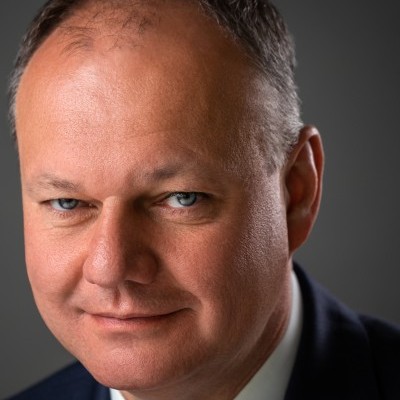
Škoda Digital
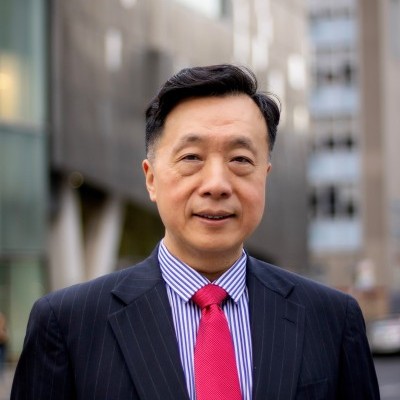
ITS Program at the University of Wisconsin

PIARC (World Road Association)

Budapest University of Technology and Economics
Mathias Corvinus Collegium

Building on recent developments, including the Social Climate Fund and Commission Recommendation (EU) 2025/1021 on transport poverty, the session will investigate mobility solutions that combine availability, affordability, accessibility, reliability, and decarbonisation.
Panellists from policy, academia, civil society, local authorities, and the transport sector will explore opportunities to strengthen systems by addressing challenges such as maintaining essential infrastructure, using data to identify vulnerable users or users whose needs are often not fully reflected (e.g. women), enhancing smart mobility, and fostering coordinated governance.
The discussion will highlight the needs of vulnerable groups and the role of transport as a social equaliser and lifeline for remote and outermost regions. The session aims to highlight the research needs to combat transport poverty, so that research can support policymaking.
Moderator:
Stefano Ricci (Sapienza)
Rapporteur:
Celestino Sanchez (EURNEX)
Speakers:
Annemarie Hertner (DG MOVE)
Philipp Shahinfar (RNV)
Floridea Di Ciommo (CambiaMO)
Karen Vancluysen (POLIS)
Ethem Pekin (CER)
The session will explore how Safe System Approach principles have been applied across the different transport sectors and how the differences in regulation, culture, and operations can shape their effectiveness.
The session will also examine different approaches to delivering safety practices, such as imbedding technologies like automation and AI, improving infrastructure, enforcement and working collaboratively and whether they have been successful.
Finally, the session will discuss the lessons learnt from putting into action the Safe System Approach, its impact on reducing the road fatalities and what additional developments are needed for further reduction in road fatalities and severe injuries, which has generally stalled during the last five years.
By identifying systemic barriers such as funding gaps, political will and public acceptance, the session aims to chart a path toward a more effective deployment of the Safe System Approach in road transport.
Moderator:
Karine Sbirrazzuoli (UITP)
Rapporteur:
Peter Urban (RWTH Aachen University)
Speakers:
Zsolt Szalay (BME)
Marko Ševrović (University of Zagreb)
Magnus Granström (Chalmers)
Oliver Canham (Euro NCAP)
Claire Depré (DG MOVE)
Moderator:
Thierry Goger (FEHRL)
Rapporteur:
Marit Due (Vegvesen)
Speakers:
Dominik Piotrowski (DG MOVE)
Ciaran McNally (UCD)
Jean-Luc Di Paola-Galloni (Valeo)
Hildegunn McLernon (Kongsberg)
Béla Galgóczi (ETUI)
Moderator:
Lucie Beaumel (EGVIA)
Rapporteur:
Lucie Beaumel (EGVIA)
Speakers:
Manasa Sridhar (Iveco)
Jean-Luc Di Paola-Galloni (Valeo)
Eric Armengaud (E-VOLVE cluster)
Alejandro Diaz (CIRCE)
Ian Faye (Bosch)
Moderator:
Armando Carrillo Zanuy (EURNEX)
Rapporteur:
Celestino Sanchez (EURNEX)
Speakers:
Helena Rodrigues (DG RTD)
Marion Berbineau\*\* (Gustave Eiffel University)
Jean-Michel Evanghelou (UIC)
Lars Deiterding (Hacon)
Moderator:
Sergio Barbarino (FIT Consulting)
Rapporteur:
Yanying Li (ALICE)
Speakers:
Fernando Liesa (ALICE)
Andrea Condotta (Gruber Logistics)
Paola Astegiano (FIT Consulting)
Ioanna Fergadiotou (INLECOM)
Eric Ballot (MINES Paris)
Moderator:
Caroline Alméras (ECTRI)
Rapporteur:
Ana Pereira (ECTRI)
Speakers:
Maria Guillén Molina (DG RTD)
Kay Gade (DLR)
Zoltán Hamar (AVL ZalaZONE)
Michael Meyer zu Hörste (DLR)
Anders Öster (Wartsila)
Moderator:
Jaap Gebraad (WTP)
Rapporteur:
Alexandros Marios Constantes (WTP)
Speakers:
Hildegunn McLernon (Kongsberg)
Guido Sacchetto (DG MARE)
Pieter Huyskens (Damen)
Jorge Miguel Lara López (Valenciaport)
121 Olga Gotalay, Riccardo D'Elia, Alberto Termine, Francesco Flammini, Stefano Ricci, Peyman Asmari and Andrea Quattrini – Cognitive Digital Twins for Integrated and Automated Multimodal Logistic Terminals
Presenter: Olga Gotalay
292 Denis Andres Maigualema-Quimbita\*, Victor Monzonis Melero, David Gomez-Barquero and Juan Vicente Balbastre Tejedor – Resilient UAV Routes for Emergency Services Using 5G Networks
Presenter: Denis Andres Maigualema-Quimbita\*
456 Tamás Márton Kazár, Roland Nagy, Árpád Török and Zsombor Pethő – Testing Enhanced Emergency Braking in NLoS Scenarios: Comparing Radar and V2X Risk Estimation with Machine Learning
Presenter: Árpád Török
1259 Manuel Van Rensbergen, Sachin Kumar Bhoi, Alexander Kospach, Sajib Chakraborty and Omar Hegazy – Adaptive Surrogate Model for Real-Time Condition and Health Monitoring of Powertrain Components
Presenter: Omar Hegazy
1389 Konstantinos Katzilieris, Emmanouil Kampitakis, Eleni Mantouka and Eleni Vlahogianni – Dynamic Control of Reconfigurable Urban Corridors in the presence of CAVs
Presenter: Konstantinos Katzilieris
1461 Getachew Hagos Geleta, Marion Berbineau\*\*, Simon Collart-Dutilleul, Francesco Flammini and Nicola Sacco – A Coloured Petri Net Model to Assess Dependability of Train-to-Train 5G NR V2X Communications for Virtual Coupling
Presenter: Marion Berbineau\*\*
28 André Freitas and Daniela Carvalho – Mainstreaming Rural Mobility in Sustainable Urban Mobility Planning: A Framework For Rural-Proofed SUMPs
Presenter: André Freitas
634 Lorena Sáez, Miguel Llop, Jorge Feliu, Ana Palanca, Ángel Laguna and Jaime Luezas – Enabling Maritime Digital Transformation through Data Harmonisation and Interoperability: Implementation of the EMSWe Regulation
Presenter: Jorge Feliu
1032 Clément Lefebvre, Vincent Lébé, Ricardo Pereira, Johan Sundell, Arnaud Jaoul, Kenza Saiah and Nenad Mijatovic – Building Trust in AI: A Necessity for Railway
Presenter: Clément Lefebvre
1405 Gonzalo Sandiás, José Andrés Giménez and Gabriel Ferrús – Assessment and alignment of JIT - Port Call Optimisation standardisation initiatives at international level
Presenter: Gonzalo Sandiás
1406 Karen Valitov, Melvin Wong and Soora Rasouli – Toward a User-Centered Privacy Framework for Transport Data Sharing: A design framework for Trust, Control, and Participation
Presenter: Karen Valitov
1525 Daniel Franco and Dr. Wolfgang Backhaus – CCAM‑readiness Self‑Assessment Tool: empowering authorities to steer CCAM towards sustainable futures
Presenter: Dr. Wolfgang Backhaus
32 Hamdi El Gaied, Didier Frugier, André Chamaret and Patrick Henry – Evaluating Flexibility and Assets in Battery-Powered Train Operations: A Simulation Approach
Presenter: Hamdi El Gaied
210 Batool Madani and Jaspal Singh – Underpinning Factors Influencing the Adoption of Battery-Electric Buses: Enablers, Barriers, and Global Learnings
Presenter: Jaspal Singh
797 Giovanni De Nunzio, Suzanne Bussod, Celeste Muilwijk and Miklós Doma – Assessing the Potential for CO₂ and Pollutant Emission Reduction via Redistribution of Port-Induced Road Traffic: A Case Study of the Port of Rotterdam
Presenter: Miklós Doma
979 Henrik Gillström – Breaking down the barriers: The evolution of electric truck adoption in transport systems
Presenter: Henrik Gillström
1364 Maeva Meyer and Thomas Bousonville – A Tracking Data-Based Evaluation of Truck Electrification Potential in Europe
Presenter: Maeva Meyer
1521 Athanasios Dimaratos, Dimitris Kontses, Leonidas Ntziachristos and Zisis Samaras – A modular system for sampling and measuring non-exhaust particles of light-duty vehicles in on-road testing
Presenter: Athanasios Dimaratos
45 Cyril Alias, Anastasiya Azarko, Vladislav Maraš, Angeliki Stouraiti, Jonas Zum Felde and Harilaos N. Psaraftis – A Method to Evaluate the Logistics Performance in Automated Waterborne Transport and Logistics Cases
Presenter: Anastasiya Azarko
151 Florian Herrmann, Andrei Turlea, Lorenzo Cello, Paola Astegiano and Paola Cossu – Accelerating data-driven systemic transition in urban logistics at four Living Labs: lessons from the DISCO Project
Presenter: Lorenzo Cello
243 Giancarlo Ferrara, Patricia Hervías Vallejo, Giovanni Riccardi and Rodrigo Benedit Pascual – U-ELCOME: U-space services for safe and efficient drone operations in Europe
Presenter: Giancarlo Ferrara
784 Riccardo Maratini, Giuseppe Luppino, Luca Simone, Lorenzo Cello, Fahad Anwar, Ines Pentek and Tomislav Letnik – Strategic Challenges, Opportunities and Enablers of Efficient Regional Collaborative Logistics
Presenter: Riccardo Maratini
1445 Elisabete Arsenio\*\*, Marluci Menezes, João Tiago Aparicio and Gabriel Dias – Collaborative Innovation for Intelligent, Zero-Emission and Intermodal Freight Transport & Logistics
Presenter: Elisabete Arsenio\*\*
1510 Cristiana Piccioni, Riccardo Licciardello, Cristiano Marinacci, Miad Farokhsiar and Stefano Ricci – A Roadmap for the Transition to Automation in Rail Freight Shunting Yards
Presenter: Miad Farokhsiar
122 Claudio Mantero\*, Andres Rodriguez and Luigi Dell'Olio – Tourist Mobility Patterns in Madeira: Time–Cost Mixed Logit Model and Policy Implications.
Presenter: Claudio Mantero\*
337 Gergő Galiger, Nguyen Duy Chien, Viktória Hideg, Patrik Tóth and Péter Kovács – Climate Resilience Analysis of Public Spaces via Model-based Artificial Intelligence Methods
Presenter: Gergő Galiger
383 Giovanni Riccardi, Edoardo Fornaciari, Mariapia Molinario, Maria Gabriella Giovannetti, Marika Lombardi and Sara McNamee Freire – Demonstrating interoperability for Innovative Air Mobility in the Rome Vertiport Network: A SESAR EUREKA Project Validation
Presenter: Giovanni Riccardi
442 Stefanie Gaebler, Philipp Rollin, Martin Hettich and Eike Hartmann – Work Here, Live There, Pay the Fare: Analysing commuting behaviour and commuting costs based on a synthetic population
Presenter: Stefanie Gaebler
1198 Sophie Gliese, Sascha von Behren, Jessica Slamka and Julia Kopf – Paradise City? Classification of Urban Archetypes to Model Transportation Systems Worldwide
Presenter: Sophie Gliese
1437 Anna Voskoboynikova, Anne Aguilera and Mariane Thebert – Decarbonizing interurban commuting in France: from the emergence of new arenas for dialogue to the implementation of experimental mobility solutions
Presenter: Anne Aguilera
113 Tobias Wendt, Johannes Müller and Klaus Bogenberger – Car Subscription – Between Renting and Leasing: An Empirical Study on Car Subscription Customers and Their Usage
Presenter: Tobias Wendt
396 Diana Naranjo, Juan Nicolas Gonzalez, Laura Garrido, Thais Rangel and Jose Manuel Vassallo – Contribution of New Shared Mobility Services to achieving key sustainability goals from a stakeholder perspective
Presenter: Laura Garrido
397 Diana Naranjo, Juan Nicolas Gonzalez, Laura Garrido, Thais Rangel and Jose Manuel Vassallo – Technological Challenges of New Shared Mobility Services: Stakeholder Perspective
Presenter: Diana Naranjo
993 Márton Korompay and Dávid Földes – Does the temporal asymmetry of station traffic mirror urban functions? Evidence from Budapest bike-sharing
Presenter: Márton Korompay
1008 Frances Sprei and Devon McAslan – Evaluation of Mobility Agreements to Reduce Parking Requirements in Cities
Presenter: Frances Sprei
1085 Ognjen Bobičić and Domokos Esztergár-Kiss – Attitudinal Profiles of Potential Shared Cargo Bike Users in Budapest
Presenter: Domokos Esztergár-Kiss
234 Caiyin Dong, Chenyang Wu, Hyungchul Chung, Hongliang Ding, Sisi Jian and Tiantian Chen – When Safety Is Not Free: Mitigating the Transportation Pink Tax Through Safety-Oriented Policy Interventions
Presenter: Tiantian Chen
405 Eva Grigoriadou, Evelina Faliagka, Christina Karamperi, George Gorgogetas, Iason Sioutis and Evangelia Latsa – Integrating Gender Perspectives into Climate-Neutral Urban Mobility: Insights from Trikala, Greece
Presenter: Eva Grigoriadou
705 Cornelia-Mădălina Șuta, Max Fischer-Barnicol, Konstantinos Kamargiannis and Christos Gkartzonikas – Advancing Inclusive, Accessible and Equitable Mobility in Europe
Presenter: Cornelia-Mădălina Șuta
948 Isabel Margot-Cattin, Sophie Nadia Gaber, Derek P.T.H. Christie, Selina Egger, Brigitte Elisabeth Gantschnig, Verena C. Tatzer-Hanten, Brenda Vrkljan, Ann-Helen Patomella, Sophia Vardaki, Giovanni Circella, Priscilla Harries and Tadhg Stapleton – Building opportunities to support inclusive community mobility for all: the BOPALiM COST Action
Presenter: Isabel Margot-Cattin
1283 Panagiota Mavrogenidou and Athena Tsirimpa – Moving While Queer: A Case Study on Harassment and Visibility in Public Transport
Presenter: Athena Tsirimpa
1617 Guilhermina Torrao and Esko Lehtonen – Gender Gap in Automated Vehicle Adoption: Cross-National Evidence and Socioeconomic Insights for Inclusive Mobility
Presenter: Guilhermina Torrao
354 Sana Debbech and Aristide Lesel – Astéria : a MBSE Framework for Railway Systems Design and Digital Continuity
Presenter: Sana Debbech
776 Gianluigi Tortorelli, Maurizio Guadagno, Verónica Sanots Arconada, Ander Galparsoro Maiz, Peter Sergeant and Hendrik Vansompel – Hybrid-Excited Axial-Flux Motor with Flux Bridge
Presenter: Gianluigi Tortorelli
877 Jon Hernandez-Martinez, Javier Santamaria, Jon Iñaki Arrizubieta, Nekane Correa and Ernesto G. Vadillo – New Insights into the Investigation on Additive Manufacturing for its Application on Railway Wheels
Presenter: Jon Hernandez-Martinez
965 Janin Fauth, Koen Mommens and Heleen Buldeo Rai – User Preferences for Electric Light Commercial Vehicle Innovations in Urban Logistics
Presenter: Janin Fauth
1166 Kostas Belibassakis, Anders Oster and Lokukaluge Prasad Perera – Hydrodynamics and multi-physics simulations towards systematic development of Digital Twin in shipping
Presenter: Kostas Belibassakis
1628 Mateo Barbero, Cristina Dimundo, Falak Khalid, Adrian Krezlik, Araliya Mosleh, Cecilia Vale, Mohammadreza Mohammadi, Diogo Ribeiro, Francisco Andrade, João Ventura, Belmira Neto, Paulo Rosa Santos and A.H.S. Garmabaki – Sustainable Renewal and Maintenance Optimization of an Existing Railway Line Using AI and Digitalization Tools
Presenter: Falak Khalid
182 Wassamon Phusakulkajorn, Zili Li and Alfredo Núñez – Tailored AI for Predictive Railway Maintenance
Presenter: Zili Li
470 Marc Sango, Johnson Ganesh, Sébastien Loiseau and Edouard Chabanier – System Model for Change Impact Analysis in Railway Electrical Traction Chain
Presenter: Marc Sango
561 Florian Thiery, Ajaykrishnan Selucca Muralidharan, Praneeth Chandran, Johan Odelius and Matti Rantatalo – Standardizing Wayside Monitoring Data via CDF Rescaling: A Case Study on Wheel Impact Load Detectors
Presenter: Florian Thiery
798 Adrien Gharios, Jean-Baptiste Himbert and Nadia Ammad – Toward SIL4-Certifiable Onboard Train Localisation via Chain Fusion
Presenter: Adrien Gharios
1273 Laura Rabadán, Andoni Cortés, Alexandre Corcia, Javier Ortuondo, Javier Barandiaran and Oihana Otaegui – RailVision: An Integrated Solution for Train Detection, Speed Estimation, and Direction Analysis in Railway Environments
Presenter: Laura Rabadán
1367 Debdeep Mukherjee, Eduardo Di Santi and Nenad Mijatovic – Measuring Confidence on Predictive Models for Railway Track Circuit Failures with Conformal and Probabilistic Techniques
Presenter: Debdeep Mukherjee
500 Magnus Holmsteen Jørgensen – Improving Pavement Structural Assessment with AI-Driven GPR Layer Detection
Presenter: Magnus Holmsteen Jørgensen
558 Matúš Kováč, Matej Brna and Peter Pisca – Correlation Analysis Between Pavement Texture Parameters and Skid Resistance Using Machine Learning
Presenter: Matúš Kováč
905 Syed Ibrahim Hassan, David Power, Waqar Shahid Qureshi and Kieran Feighan – IRSC: Intelligent Road Surface Classification Using Computer Vision and Deep Learning
Presenter: Syed Ibrahim Hassan
1030 Panagiotis Vrachnos, Alexandros Petropoulos, Ilias Koulalis, Irina Stipanovic, Nikolaos Dourvas, Konstantinos Ioannidis and Stefanos Vrochidis – Semantic - Aware 3D Gaussian Splatting for Road Pavement Condition Monitoring
Presenter: Panagiotis Vrachnos
1276 Davide Lo Presti, Davide Randazzo Mignacca and Gabriele Musso – Developing Urban Road Pavement Management System by Means of Private Connected Vehicles Data Monitoring
Presenter: Davide Lo Presti
1332 Waqar Shahid Qureshi, David Power, Dympna O' Sullivan, Syed Ibrahim Hassan, Brian Mulry and Kieran Feighan – Exploiting Ordinal Accuracy for Visual Pavement Surface Rating on Regional Road Networks
Presenter: Waqar Shahid Qureshi